

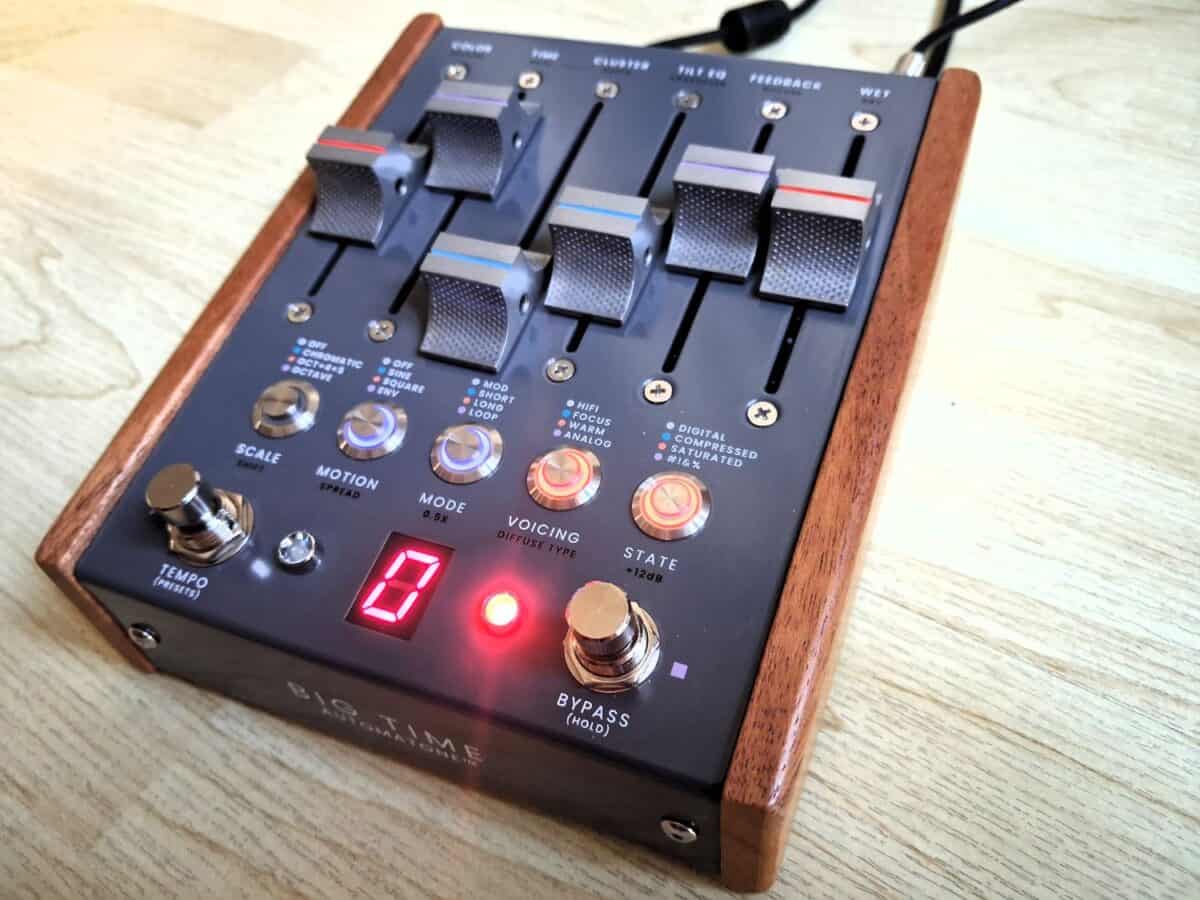
Heute beginne ich einen Testbericht mit einem Spoileralarm, denn das Fazit gibt es gleich mal vorweg: Das Chase Bliss BIG TIME ist das beste Delay, das seit den Racks der 80er-Jahre hergestellt wurde! Es ist mein Delay des Jahres 2026!
Wie schon im Vorwort des wieder einmal wunderbaren Handbuchs von John Snyder von Electronic Audio Experiments geschrieben wird, hat man bei der Entwicklung des Pedals das Zusammenspiel von Preamp und Delay-Sektion der 80er-Jahre Racks analysiert. Und das merkt man durch und durch!
Beim BIG TIME stellt der Preamp einen klangentscheidenden Teil des wunderbaren Delay-Sounds dar.
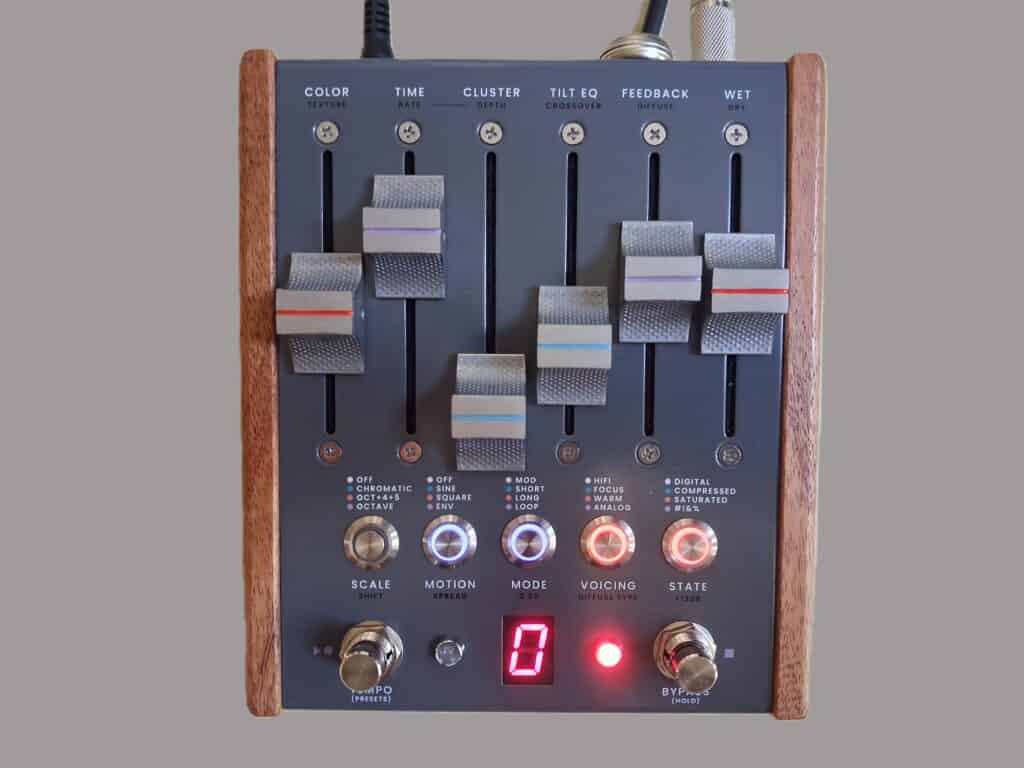
Ich war schon lange auf der Suche nach genau diesem Sound, den die Racks der 80er immer lieferten. Diesen vollen und leicht in die Sättigung getriebenen Delay-Sound! Einfach herrlich!
Und auch der direkte Sound wurde wunderbar gefärbt.
Die Verarbeitung des Pedals ist top. Es sieht nicht nur wundervoll aus, sondern ist auch sehr hochwertig verarbeitet und extrem stabil. Die Fader laufen butterweich.
Der Preamp – der Star des Schaltkreises
Der analoge Preamp des Chase Bliss BIG TIME tut genau das, was er soll: Er dickt den Gitarrensound an und fährt ihn in die Sättigung. Das Gitarrenspiel wird dynamischer und bekommt, je nach Bedarf, etwas Schmutz. Die einzelnen Töne perlen aus dem Amp und jede spielerische Nuance wird perfekt übertragen.
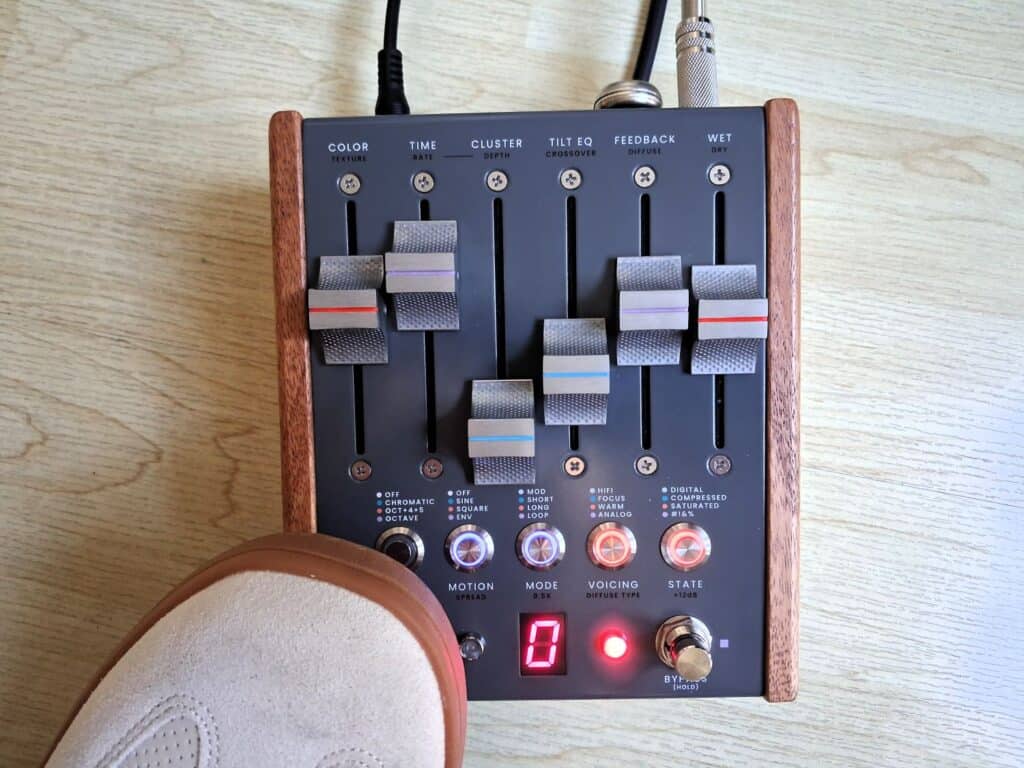
Bisher nutzte ich immer einen Verzerrer und einen Kompressor in Verbindung mit meinen Delays genutzt. Lediglich mein Big Box Deluxe Memory Man und mein Fulltone TTE konnten mir diese Klangfülle und einen leichten Boost mit dem besonderen Charakter liefern. Das Chase Bliss BIG TIME entspricht damit genau meinen Klangvorstellungen und ich spare mir auch noch zwei Pedale auf dem Board!
Die Modi
Es ist im Digital Mode natürlich auch möglich, komplett cleane Delays zu erzeugen. Im Compressed Mode sind diese bereits beschriebenen, wunderbaren Ducking Delays im Stil der 80er-Jahre Racks möglich.
Besonders gelungen ist der Saturated Mode. Hier wird – ganz im Sinne des Namens – eine leichte Verzerrung erzeugt.
In all diesen Modes kann man natürlich über Color und Textur das Gain optimal abstimmbar.
Im #+?& Modus wird es richtig heftig. Hier wird ordentlich gezerrt und bis zum gated Fuzz auch zerstört. Mit dem Texture-Fader lässt sich der Bias der Schaltung einstellen. Außerdem ist es möglich, das Signal noch mit 12 dB zu boosten, falls das Gain nicht ausreicht.
Der Grundsound des Chase Bliss BIG TIME
Mit dem Voicing und dem Tilt EQ kann der Sound wunderbar vom klaren HiFi-Delay, das vielleicht sogar mit jeder Wiederholung noch etwas ausdünnt bis zu einem dunklen und analog klingenden Delay alles abdecken. Die Frequenzen der Voicings sind sehr gut gewählt und mit dem EQ lassen sich die Frequenzen abstimmen.
Modulation
Die Modulation ist als Sinus- oder Squarewave einstellbar. Mit Speed und Depth kann man die Modulationstiefe sehr gut abstimmen.
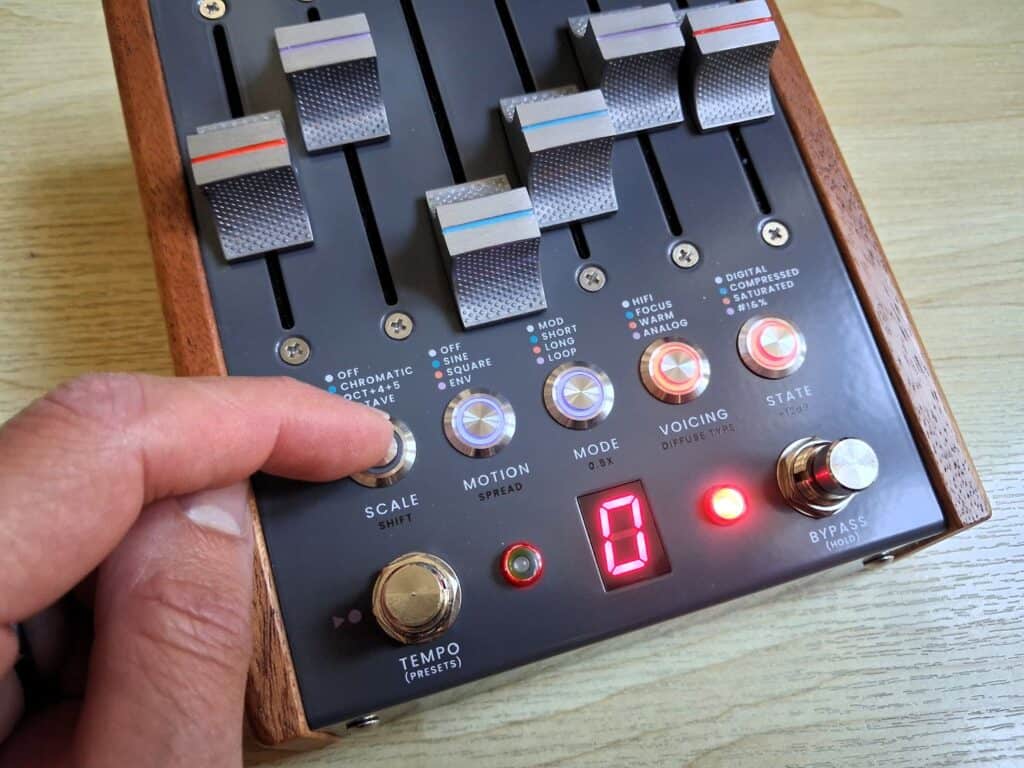
Besonders gut finde ich zudem, dass auch eine Envelope-gesteuerte Modulation möglich ist. Ich liebe es, wenn man die Modulation anschlagsdynamisch steuern kann.
Noch abgefahrener wird es, wenn man die Pitch-Option aktiviert. Hier können chromatische Pitches, oktavierte Töne mit Quarten und Quinten oder die Töne der Oktave gespielt werden. Da kommt der Charakter des Chase Bliss Thermae durch.
Stereo
Oh, ja, das BIG TIME liefert natürlich auch Stereo-Sounds! Mit den Reglern für Spread und Diffusion lässt sich die Klangbreite erweitern und eine Art Reverb-Effekt hinzufügen. Von einem erweiterten Stereofeld bis zum Ping Pong ist hier einiges an Fläche möglich.
Multihead
Hinter dem Cluster verstecken sich – Trommelwirbel: Multihead-Delays. Sie lassen sich einblenden und sind dann etwas leiser als das ursprüngliche Delaysignal. Dreht man Cluster weiter auf, erhält man unterschiedliche Multihead-Patterns. In Verbindung mit Diffusion kann hier eine klangliche Wand erzeugt werden. Fantastisch!
BIG TIME – das etwas andere Delay
Das BIG TIME ist anders aufgebaut als andere digitale Delays. Während man in der Regel meist auf Presets für Tape, Analog und Digital trifft, die man dann noch etwas einstellen kann, baut man sich mit dem BIG TIME seinen Wunschsound komplett selbst auf.
Etwas Sättigung vom Preamp mit drei bis vier Repeats, vielleicht einen zweiten Delayhead dazu, etwas Diffusion und das Ganze dann mit dem EQ abgestimmt? Oh, ja, das macht Spaß und da sollte für jeden etwas dabei sein.
Mit den abspeicherbaren Presets, die auch per MIDI abgerufen werden können, MIDI Sync, CV und Expression-Pedal-Anschluss und natürlich Stereo in und out wurde hier wirklich ein Arbeitstier auf den Markt gebracht, das seinesgleichen sucht.
Die Range der Delayzeit kann zwischen Mod, Short und Long umgeschaltet werden. Dadurch hat man immer die perfekte Range.
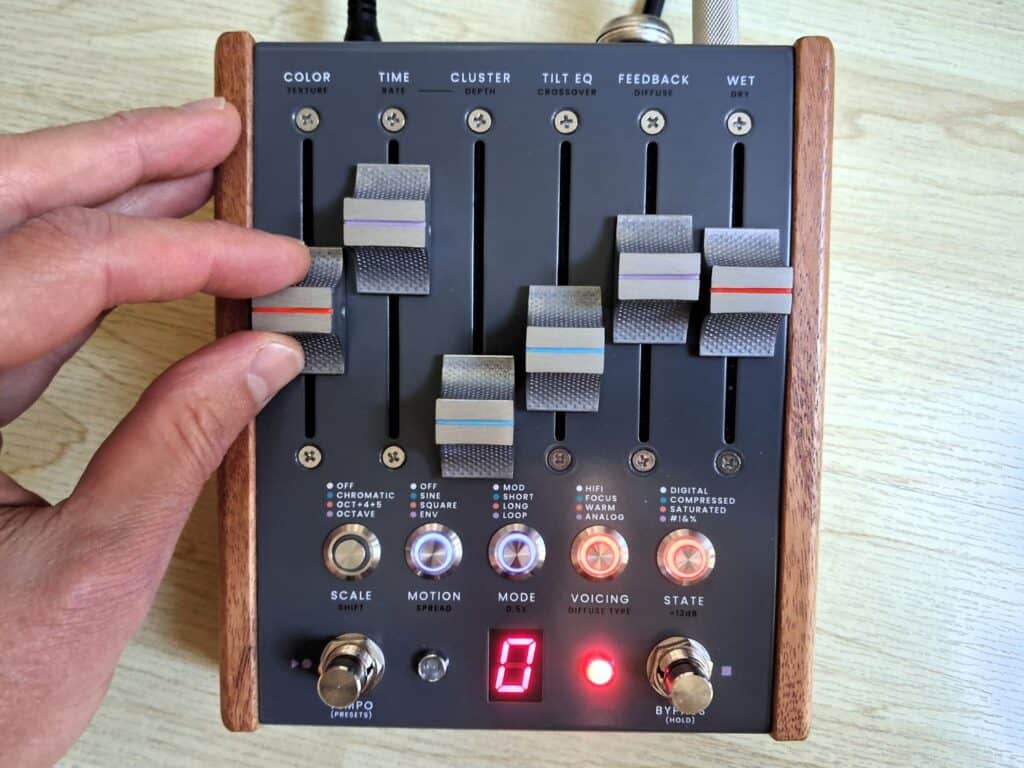
Und als wäre das alles nicht genug, hat das BIG TIME auch noch einen Looper. Der Sound des Loops lässt sich mit den internen Parametern bearbeiten. Und wenn man von Long auf Loop umstellt, bleiben die vorher gespielten Delays im Loop gleich erhalten. Man kann den Loop natürlich auch traditionell aufnehmen. Alles ist erlaubt.
Auf jeden Fall bietet das Pedal jede Menge Raum und eine richtige BIG TIME für Klangexperimente.
Fazit
Trotz meines Spoilers gleich zu Beginn, will ich natürlich noch einmal ein ausführlicheres Fazit ziehen:
Das Chase Bliss BIG TIME hat neue Maßstäbe gesetzt, indem es den Grundgedanken der ersten, digitalen Racks aufgegriffen hat und verfeinert hat.
Mit dem Analog Dry Thru bleibt die Ansprache direkt und die Delays lassen sich perfekt individuell einstellen. Über die wunderbare Modulation und die Pitch-Optionen findet man immer wieder wunderschöne neue Sounds! Ein Delay-Pedal das begeistert!
Dieses Pedal wird es mit absoluter Sicherheit auf zahlreiche Pedalboards und in etliche Studios schaffen. Dabei wird es wahrscheinlich auch das eine oder andere Pedal vom Board kicken. Und ich denke hier nicht nur Delays, sondern auch an Verzerrer, Kompressoren …
Vielen Dank an das ganze Chase Bliss Team für dieses unglaublich großartige Delay!